
Barrington Town Council: No second SRO in schools, at least not yet
Councilor says 'No' vote is not the end of SRO conversation
Members of the Barrington Town Council voted unanimously against hiring a second school resource officer for Barrington schools.
The decision, made during the council meeting on Monday …
This item is available in full to subscribers.
Please log in to continue |
Register to post eventsIf you'd like to post an event to our calendar, you can create a free account by clicking here. Note that free accounts do not have access to our subscriber-only content. |
Day pass subscribers
Are you a day pass subscriber who needs to log in? Click here to continue.
Barrington Town Council: No second SRO in schools, at least not yet
Councilor says 'No' vote is not the end of SRO conversation
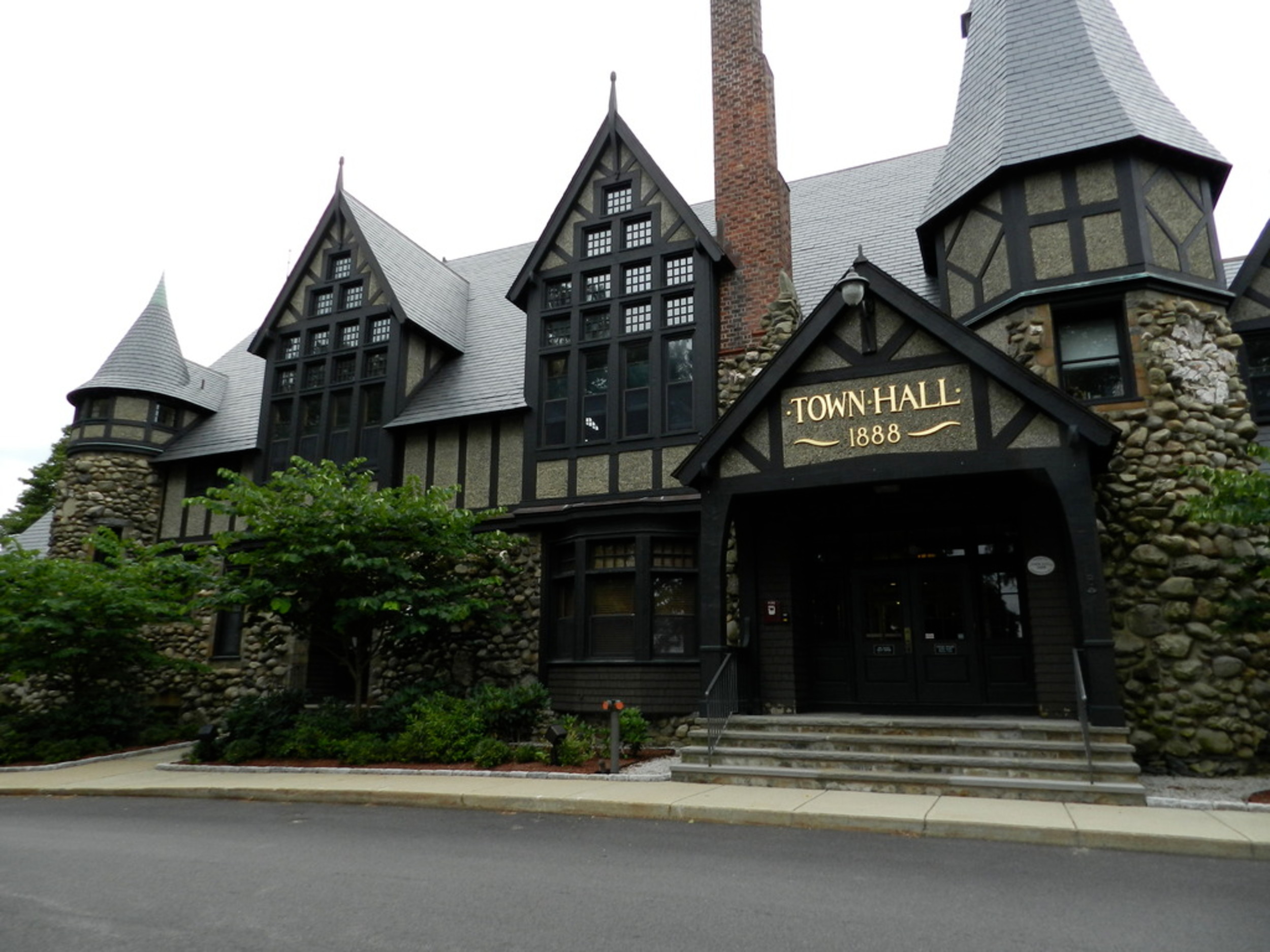
Members of the Barrington Town Council voted unanimously against hiring a second school resource officer for Barrington schools.
The decision, made during the council meeting on Monday night, Sept. 14, followed more than an hour of testimony from local school officials, the police chief, students from a Providence-based advocacy group called Alliance of Rhode Island Southeast Asians for Education, an official from the RI Center for Justice, and a handful of Barrington residents.
Councilors shared their reasons for voting against the motion to approve the MOU (memorandum of understanding) for the second SRO. Kerry O’Neill said data provided by the police chief in an effort to support the second SRO — that a third of averted school attacks were because of SROs — showed that two-thirds of averted attacks were the result of the rest of the school community and other officials. Liana Cassar said she has complete confidence in the local police department and respect for Barrington Police Chief Michael Correia. She also voiced support for a second SRO, but wanted to see a full plan and strategy before signing off on the measure. She spoke about moving in a direction toward having a second SRO, but was just not there yet.
Jordan Jancosek said the SRO was clearly a shared position between the town government and the local school department, and if it is going to be a shared position then it needs to be developed in a shared approach. She called for a working group including the school committee, police department and town council. Jancosek said she was voting no on the second SRO, but that vote was not an end to the conversation.
Barrington Town Council President Braxton Cloutier said the initiative can move forward in the future, but not as it was structured currently. He then made a motion to approve the MOU for a second school resource officer at Barrington schools, and a community engagement officer within the police department. Jancosek seconded the motion. Then all four councilors voted against the motion.
For and against
Earlier in the discussion, Barrington School Committee Chairman TJ Peck voiced his support for the second SRO. Peck explained the need for the second SRO in the district, and detailed how the school committee had held four “reads” of the MOU framework, gathering important feedback to incorporate into the MOU.
Peck also reminded councilors that the SROs work was not theoretical or done in a vacuum — he said a life was saved in Barrington because of the district’s school resource officer.
Barrington Superintendent of Schools Dr. Holly Hageman, Police Chief Michael Correia, and a few local residents also shared their support for the second SRO. They cited the role the current SRO plays and how he was stretched thin by the demands of the position.
Hageman, who has more than 40 years of experience in education, said she has worked with SROs before Sandy Hook, during Sandy Hook and since Sandy Hook… “and I’ve had excellent experiences” with the SROs. She also praised the detailed nature of the MOU.
Cassar had asked Hageman if another type of security personnel could do the work of the SRO … someone other than a police officer. Hageman said that in the last 25 years, post-Columbine and post-Sandy Hook, SROs have been an important ingredient in overall safety and security. Hageman said having a second SRO can also serve as an important deterrent to people who may be considering inflicting harm at a school.
Chief Correia challenged the narrative shared against SROs. He said school children like seeing police officers — he referenced a recent event where local police visited the elementary schools in town to celebrate their work. He said the schoolchildren loved seeing the officers.
Chief Correia said he takes a little personally when other people spread the idea that police officers are neanderthals. He shared a story of how he and a local PE teacher and about 40 students all rode their bikes together to school earlier.
Chief Correia also questioned the message shared in an ACLU report that alleged minority students were impacted in a disparate manner by SROs. He pointed to data from three years of arrest reports — during that span, 34 young people were cited (non-handcuff arrests), and of those 34, 25 were white males, seven were white females, and two were minority females.
“There’s no disparate outcome there,” he said, adding that the ACLU allegations were false. He said there is not one single fact or number that indicates causation between SROs and disparate outcomes for minority students.
The testimony against hiring a second SRO included voices from a handful of Providence students, and Barrington student Chloe Byrne. She said having another SRO in local schools could make students feel more intimidated. Byrne said the resources used to pay for a second SRO could be used for other support personnel.
(Earlier in the discussion, Peck had mentioned that Barrington schools had increased the number of mental health professionals and that the district was now fully staffed in that capacity.)
Jennifer Wood, from the RI Center for Justice, said the MOU raised more questions. She also said the recent Kids Count data showed that Barrington schools ranked in the bottom half of the state in the number of social workers in the district. Wood said the MOU document could be further developed in a joint effort between the school committee, police department and town council.
Barrington resident Janine Wolf said she wanted to push back on the suggestion that the Barrington Public School Department should be a mental health provider. She said mental health care belongs in a professional medical setting. Wolf also challenged those who said that students may feel uncomfortable with a police officer present in the schools. She said that the SRO program would actually help students become more comfortable with police, seeing them in a positive light.
Reaction
Following the council’s vote, Peck shared his reaction.
“I think what we heard tonight is a town council that prioritized safety and had some constructive feedback on putting forth a path to have a better dialogue between the school committee and the town council and the Barrington Police Department and the superintendent’s office, to see if we can strike a right balance to maintain student safety and address incidents,” he said.


