
Sunny Acres residents win early court round
Ruling keeps alive residents’ claim they had right to buy Portsmouth park
PORTSMOUTH — A Superior Court judge has refused to end a legal fight over the potential sale of a Portsmouth mobile home park, ruling that residents may still be able to argue they had the right to …
This item is available in full to subscribers.
Please log in to continue |
Register to post eventsIf you'd like to post an event to our calendar, you can create a free account by clicking here. Note that free accounts do not have access to our subscriber-only content. |
Day pass subscribers
Are you a day pass subscriber who needs to log in? Click here to continue.
Sunny Acres residents win early court round
Ruling keeps alive residents’ claim they had right to buy Portsmouth park
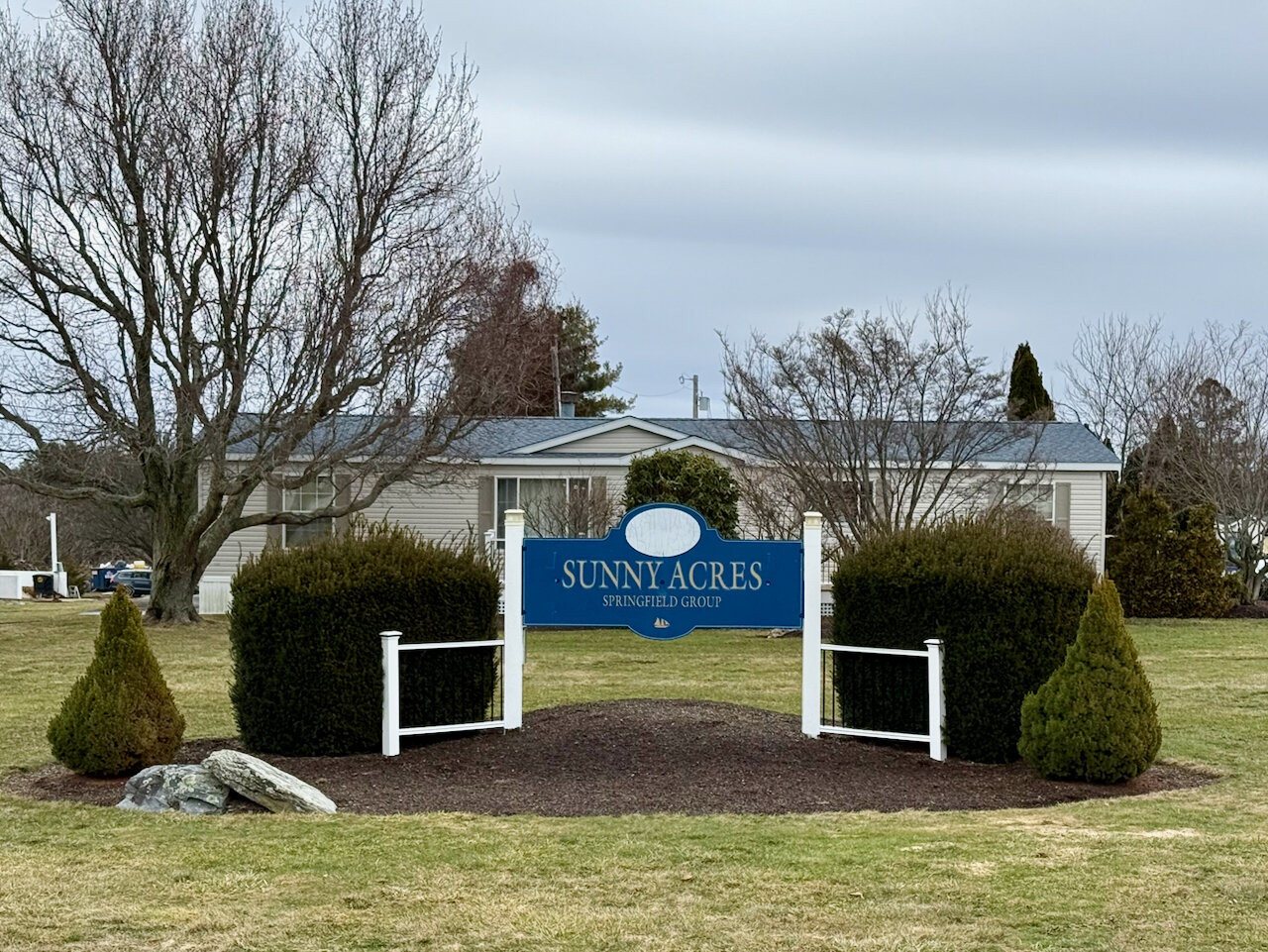
PORTSMOUTH — A Superior Court judge has refused to end a legal fight over the potential sale of a Portsmouth mobile home park, ruling that residents may still be able to argue they had the right to buy the property themselves.
In a decision filed March 3 in Newport County Superior Court, Judge Brian P. Licht denied a request by the park’s owner, The Springfield Group, for summary judgment in its lawsuit against the residents’ organization, Our Sunny Acres Association.
The ruling does not determine who will ultimately win the case but allows the dispute to move forward because key factual questions remain unresolved.
At the center of the case is the possible sale of the Sunny Acres Mobile Home Park and whether residents had a legal “right of first refusal,” allowing them to match an outside buyer’s offer and purchase the park themselves.
The Springfield Group owns the Sunny Acres Mobile Home Park at 175 Bristol Ferry Road.
According to court records, Crown Communities LLC submitted a letter of intent in December 2024 proposing to buy the park. The two companies later signed a purchase-and-sale agreement on March 20, 2025.
In May 2025, Springfield Group notified residents of the planned sale.
Residents had already formed an association — originally called Shady Park and later renamed Our Sunny Acres Association — with the goal of potentially purchasing the property and operating it as a cooperative community.
Under Rhode Island law, resident associations at mobile home parks may have the right to buy the property before it is sold, but only if certain legal requirements are met.
Owner argued residents didn’t qualify
Springfield Group filed suit in September 2025 seeking a court declaration that the residents’ association did not meet those requirements and therefore had no right of first refusal.
The company argued that when it entered into the purchase agreement with Crown Communities, the association had not satisfied the conditions needed to claim that right.
One issue involved the association’s corporate status. The group had been incorporated in 2019, but its corporate registration was revoked by the state between September 2024 and April 2025.
Licht found that because the corporation was later reinstated, the reinstatement applied retroactively, meaning the association was considered incorporated at the time of the March 2025 agreement.
However, the judge agreed with Springfield Group that the association’s original corporate documents did not explicitly authorize it to negotiate for and purchase the park on behalf of residents — a requirement under the law. That meant the association technically did not qualify for the right of first refusal at that time.
But questions remain
Despite that conclusion, Licht ruled the case cannot be decided yet because residents raised legal defenses involving disputed facts.
The association argues Springfield Group may have waived its ability to rely on those legal deficiencies. In the May 2025 notice, the park owner said it would comply fully with the state law governing mobile home park sales and offered to provide financial and operational records if residents signed a purchase agreement.
Licht wrote that the wording of the notice could be interpreted in more than one way, making it unclear whether the owner intended to acknowledge the residents’ rights under the law.
Residents also claim promissory estoppel, arguing they relied on the owner’s statements when they spent time and money preparing a possible purchase.
According to court filings, the association held resident meetings, explored financing with housing organizations and private investors, and hired an attorney to help draft a purchase agreement.
Because those questions remain unresolved, Licht ruled that granting summary judgment would be inappropriate.
“As there are genuine issues of material fact,” he wrote, the case must continue in Newport County Superior Court.


